By Lauren Mitchell Your child doesn’t come home from school and say, “When you compared me to my cousin at dinner last night, I spent the rest of the evening wondering if something is wrong with me.” They don’t have the vocabulary for that at seven. At twelve, they have the vocabulary but not the trust. By sixteen, they’ve stopped trying to explain it entirely. The damage is quiet. It happens in the normal flow of a Tuesday evening, in the way you respond to a bad grade, in the tone you use when they’re struggling, in the praise you give and the praise you withhold without realizing it. None of it feels like a mistake while it’s happening. It feels like parenting. But children are always reading the room. They notice what makes your voice warm and what makes it flat. They notice when your attention sharpens and when it drifts. They build their entire sense of self from these small, daily signals, and five of the most common ones are quietly teaching them that who they are is not enough. Here’s what to look for, and what to do instead. 1. Measuring Them Against Someone Else’s Yardstick “Your sister never had trouble with this.” “Your friend Jake finished the whole project already.” “When I was your age, I was already doing my own laundry.” These comparisons feel motivational to the parent delivering them. To the child receiving them, they land as a verdict: you are falling behind, and someone else is doing it better. Children who grow up being compared learn to evaluate themselves through the lens of other people’s performance. They stop asking “am I getting better?” and start asking “am I better than them?” That second question is a trap with no exit, because there will always be someone ahead, and the goalposts will never stop moving. What to do instead: When you catch a comparison forming in your mind, redirect it into a question aimed at your child’s own experience. Instead of “your friend already turned hers in,” try “what part of this is giving you the most trouble?” This moves the conversation from ranking to problem-solving. It teaches your child to look inward for answers instead of sideways for approval. 2. Shutting Down the Feeling Before You Understand It A child cries because their sandwich was cut into squares instead of triangles. A teenager slams a door because you asked a simple question. Your instinct, understandably, is to correct the reaction. “Stop crying, it’s just a sandwich.” “Don’t slam doors in this house.” The behavior gets addressed. The feeling underneath gets buried. When a child’s emotions are consistently dismissed, minimized, or punished, they learn one of two things. Either my feelings are wrong (which leads to suppression, people-pleasing, and difficulty identifying emotions as an adult), or my feelings don’t matter unless they’re loud enough to force a response (which leads to escalation, outbursts, and conflict-driven communication). Neither path builds a confident human. What to do instead: Acknowledge the feeling before you address the behavior. “You’re really upset about the sandwich. I can see that.” Pause. Let the acknowledgment land. Then deal with whatever needs to be dealt with. This two-step approach takes about ten extra seconds, and it teaches your child that their emotional experience is real and valid, even when their behavior needs to change. That distinction is the foundation of emotional intelligence. 3. Making Your Love Loudest When They Achieve Think about when you light up around your child. When do they get the biggest smile, the warmest hug, the proudest voice? For many parents, the honest answer is: when the child performs. When they score the goal, bring home the A, win the award, behave perfectly at the restaurant. Children are ruthless pattern-matchers. They figure out the formula fast. The love gets loud when I perform, so performing must be what earns it. Once that formula is installed, it runs for decades. Adults who were raised this way often look successful on the outside and feel hollow on the inside, because they’ve spent their entire lives chasing a feeling of unconditional acceptance through conditional achievements. The treadmill never stops. What to do instead: Deliberately show warmth in the unremarkable moments. When they walk into the kitchen on a Saturday morning, let your face light up before they’ve done anything. When they’re sitting on the couch reading, sit next to them and be present without it being about anything. When they show you a drawing that’s honestly not very good, respond to the sharing, not the quality. The message you’re sending is: you don’t have to earn my warmth. It’s here because you’re here. 4. Rescuing Them From Every Struggle Your son is trying to tie his shoes and you’re running late. Your daughter is stuck on a math problem and getting frustrated. The faster, easier, kinder-seeming move is to step in and do it for them. You tell yourself you’re helping. What you’re actually doing, when multiplied across hundreds of small moments, is building a child who believes they cannot handle hard things on their own. Confidence is not built by being told you’re capable. It’s built by experiencing yourself being capable, especially when it’s uncomfortable. Every time you take over, you rob your child of the evidence they need to trust themselves. The short-term relief of solving the problem for them comes at the long-term cost of a kid who freezes whenever help isn’t available. What to do instead: When your child hits a wall, resist the urge to take over. Instead, ask: “What have you tried so far?” or “What do you think the next step might be?” Give the smallest possible hint, not the answer. Let the process take longer than it needs to. The goal is for your child to walk away saying “I did it” instead of “my parent did it.” Those two experiences wire completely different brains. Build extra time into your
The Busy Parent’s Guilt Trap: How to Be Emotionally Present in 15 Minutes a Day (Even When You’re Running on Empty)
By Rachel Bennett The guilt starts before you even leave the house. You’re checking your phone during breakfast. You’re mentally composing an email while your kid tells you about a dream they had. You’re physically there but emotionally somewhere else, and you know it, and they probably know it too. By evening, the guilt has compounded. You missed the thing at school. You got home late. You were too tired to play. You said “in a minute” four times and never came back. Now it’s bedtime, and you’re lying next to your kid wondering if the little time you gave them was enough, knowing in your gut it wasn’t quite. Here’s what nobody tells overwhelmed parents: the quantity of time doesn’t matter as much as you think. What matters is presence, actual emotional presence, during the time you do have. And you can give that in 15 minutes a day. Not an hour. Not a whole evening. Fifteen minutes of real connection outweighs three hours of distracted “being there.” Here’s how to do it. Why Guilt Is the Wrong Response (And What to Replace It With) Parental guilt is a trap because it feels productive. It feels like caring. “I feel guilty, therefore I’m a good parent who just needs to try harder.” But guilt doesn’t lead to better parenting. It leads to overcompensation (buying things, being overly permissive, avoiding discipline), or it leads to withdrawal (avoiding the kid because being around them triggers the guilt, which triggers more guilt). Replace guilt with honesty. “I have limited time and energy today. How do I use what I have well?” That question is a thousand times more useful than “Why am I such a bad parent?” because it leads to action instead of spiraling. The 15-Minute Connection Window Research from developmental psychology consistently shows that children don’t need constant attention. They need moments of genuine attunement, moments where they feel truly seen and heard by their parent. These moments don’t require a whole afternoon. They require your full presence for a short, concentrated period. Pick a 15-minute window each day and protect it. Morning before school, right after pickup, or the first 15 minutes of bedtime. During that window, three rules apply: no phone, no multitasking, and you follow their lead. “Follow their lead” means: if they want to show you a rock they found, you look at the rock. If they want to tell you about something that happened at recess, you listen without checking the time. If they want to just sit next to you and draw, you sit and draw. You don’t direct. You don’t teach. You don’t use it as a chance to catch up on their homework or behavior. You just show up for whatever they’re bringing, with your full attention. What Full Presence Actually Looks Like Full presence is not performing interest. Kids spot performance instantly. It’s the difference between “wow, tell me more!” in your enthusiastic parent voice and actually being curious about the weird thing they just said. Full presence looks like: eye contact at their level (kneel or sit if they’re small). Asking follow-up questions that show you were listening (“what did you do after that?”). Letting silence happen without filling it. Laughing at their joke even if it doesn’t make sense. Putting your body in a posture that says “I’m here,” not “I’m about to leave.” Full presence does not mean being entertaining, educational, or perfect. It means being available. Available to receive whatever your kid wants to share, without filtering it through your agenda for who they should be or what they should be doing. For more on the subtle daily habits that erode a child’s confidence without parents realizing it, see 5 silent parenting mistakes wrecking child confidence. How to Protect the 15 Minutes When Everything Is Competing for It The 15 minutes will not protect itself. If you wait for a natural opening in your evening, it won’t appear. The dishes, the emails, the laundry, the other kid, the partner who also needs something, all of it will eat the time before you notice. Set it as a recurring event on your calendar. As seriously as a work meeting. When the notification goes off, you stop what you’re doing, put the phone face-down in another room, and go find your kid. That’s it. Fifteen minutes. Then you return to everything else. The dishes will still be there. The emails will still be there. Your kid’s openness to sharing their world with you will not always be there. What to Do When You’re Too Exhausted to Connect Some nights you have nothing left. You’re running on fumes. Your nervous system is fried. The idea of being emotionally present for anyone, even your kid, feels like lifting a weight you can’t carry. This is real. Don’t pretend it isn’t. On those nights, the 15 minutes can be passive. Lie on the floor next to them while they play. Sit in their room while they read. Let them lean against you on the couch while something plays on TV. You don’t have to be animated or engaged. You just have to be physically near, emotionally open, and not on your phone. That’s enough. Your presence without performance is still presence. If you’re running on empty most nights and not just occasionally, that’s worth paying attention to separately. Chronic depletion isn’t a willpower problem. It’s often a boundary problem, a sleep problem, or a burnout problem that needs its own intervention. For more on rebuilding daily energy when you’ve been running depleted for months, see rebuild all day energy 21 days without caffeine. The Long Game of 15 Minutes Fifteen minutes a day is 91 hours a year. That’s nearly four full days of undistracted, genuine connection with your child. Most parents who don’t do this intentionally manage about 10 to 15 hours of real presence per year, scattered across random moments they can’t predict or protect. Your child won’t remember
How to Command 30% More Pay Without a New Degree, a New Title, or a Single Extra Hour of Work
By Rachel Bennett Somewhere along the way, you absorbed the idea that earning more money requires working more, or learning more, or climbing one more rung on the ladder. Get the certification. Get the MBA. Put in the extra hours. Wait for the promotion cycle. Play the game. Here’s what nobody in HR tells you: the difference between someone earning $75,000 and someone earning $100,000 for the same type of work is almost never education, hours, or title. It’s positioning. The higher earner knows how to frame what they do, prove what they’re worth, and negotiate without flinching. The lower earner does the same quality of work and leaves $25,000 or more on the table every year because they never learned the positioning game. This article covers the four moves that close that gap. None of them require a new degree. None of them require a new title. None of them require a single extra hour of work. They require a shift in how you present, prove, and price yourself. 1. Stop Selling Your Effort. Start Selling Your Results. Most professionals describe their work in terms of what they do: “I manage a team,” “I handle client accounts,” “I run the social media.” This is effort language. It tells your employer (or your next employer) what activities fill your day. It says nothing about what those activities produce. The shift: describe everything in terms of outcomes. “I manage a team” becomes “I lead a team of 8 that increased quarterly output by 22 percent.” “I handle client accounts” becomes “I manage a $4.2 million client portfolio with a 96 percent retention rate.” “I run the social media” becomes “I grew the company’s LinkedIn following from 3,000 to 18,000 and generated 40 percent of inbound leads through content.” Same person. Same job. Same hours. Completely different perceived value. Outcome language is the single fastest way to increase your earning power, because it makes the math obvious. If you generated $500,000 in revenue, paying you $100,000 isn’t expensive. It’s a bargain. 2. Build a Proof Stack That Makes Your Value Undeniable Saying you’re good at your job means nothing. Proving it means everything. A proof stack is a collection of evidence that demonstrates your value without you having to argue for it. Your proof stack should include: three to five quantified accomplishments (revenue generated, costs saved, projects delivered, metrics improved), two to three testimonials or endorsements from managers, clients, or colleagues (a two-sentence LinkedIn recommendation is enough), and one or two examples of work that you can share (a project summary, a case study, a before-and-after snapshot). Keep this proof stack in a living document that you update quarterly. When review season comes, you don’t have to scramble to remember what you did. You hand your manager the document and let the evidence speak. When you interview for a new role, you bring the same document. Nothing is more persuasive than a candidate who arrives with organized proof of what they deliver. For more on packaging your skills for paying clients outside your day job, see skills to income 30 days first 5000. 3. Make Yourself Easy to Pay More Employers and clients pay premium rates to people who reduce risk and remove friction. If hiring you (or keeping you) feels safe and simple, the price conversation gets easier. If hiring you feels risky or complicated, no amount of results will justify a premium. Three ways to reduce friction. First: be the person who communicates clearly and proactively. Managers pay more (consciously or not) for people who don’t require chasing. Status updates without being asked. Clear timelines. No surprises. Second: be the person who solves problems without creating new ones. Every time you bring a problem to your manager with a proposed solution already attached, your value goes up. Third: be reliable to the point of boring. Hit every deadline. Show up when you say you will. Respond within a reasonable window. Reliability is the rarest professional trait, and it commands a premium. 4. Negotiate Like Someone Who Has Options (Because You Should) The single biggest reason people are underpaid is that they accept the first number offered. Every time. Whether it’s a starting salary, an annual raise, or a freelance rate, most professionals take what’s given and tell themselves they’ll negotiate next time. They never do. The fix is mechanical, not emotional. When offered a number, say: “I appreciate the offer. Based on my results and the market rate for this role, I was expecting something closer to [15 percent higher number]. Is there flexibility?” Then stop talking. The silence is uncomfortable. Let it be uncomfortable. The first person who fills the silence usually concedes. If they say no, you haven’t lost anything. You’re still at the original offer. If they meet you partway (which happens roughly 70 percent of the time, according to salary negotiation research), you just increased your compensation by thousands of dollars for one sentence of discomfort. Multiply that by every job change and raise cycle across a 30-year career, and the difference is six figures. The key to negotiating without anxiety is having options. If this is the only job you can imagine having, you’ll accept whatever they offer. If you know you could walk and land somewhere else, you negotiate from calm. That’s why building your network and keeping your resume updated (even when you’re not looking) is so important. For a structured plan to build that kind of optionality, see 90 day escape plan leave job without pay cut. The 30% Math A 30 percent pay increase sounds dramatic until you break it down. On a $75,000 salary, that’s $22,500 more per year. If you get a 10 percent bump from switching to outcome language during your next review, a 10 percent bump from negotiating your next offer instead of accepting the first number, and a 10 percent bump from building a proof stack that makes you the obvious choice for promotions and
The 90-Day Escape Plan: How to Leave a Soul-Crushing Job Without a Pay Cut, a Gap on Your Resume, or a Panic Attack
By Lauren Mitchell You’ve been thinking about quitting for months. Maybe years. You open job boards on your lunch break. You draft resignation letters in your head during meetings. You fantasize about what it would feel like to walk out, the relief, the freedom, the ability to breathe again on a Sunday night. Then reality hits. The mortgage. The health insurance. The gap on the resume that every recruiter will ask about. The fact that quitting without a plan isn’t brave, it’s reckless. And so you stay another month. Then another. Then another. The job keeps crushing you slowly, and you keep telling yourself you’ll leave “when the time is right.” The time is never right. But the plan can be. This is a 90-day protocol for leaving a soul-crushing job without blowing up your finances, your career trajectory, or your mental health. It’s designed for professionals who can’t afford to just walk out, which is most professionals. Days 1 to 30: Stabilize Before You Strategize The first month is not about job searching. It’s about building the financial and emotional stability that lets you leave from a position of strength instead of desperation. Desperate exits lead to bad next jobs. Stable exits lead to upgrades. Week 1: Calculate your monthly bare-minimum expenses. Not your current lifestyle, your survival number. Rent, utilities, food, insurance, debt minimums. This is the number that determines how many months of runway you need. Week 2: Open a dedicated “exit fund” savings account and start an automatic transfer from every paycheck. Even $200 per pay period adds up to $2,400 over three months. Combined with any existing savings, this becomes your financial buffer, the thing that lets you negotiate from calm instead of panic. Week 3: Tell one trusted person outside of work what you’re planning. Not your work friend. Not your boss. Someone who won’t inadvertently leak the information. You need one person who knows the real timeline so you have external accountability and emotional support. For more on how overcommitment and boundary collapse lead to the burnout that’s making you want to leave, see burnout costing 47000 year reverse 30 days. Week 4: Get a full health checkup while you still have employer-sponsored insurance. Dental, vision, annual physical. Take care of anything you’ve been putting off. If you have an FSA, use the balance before it expires. Days 31 to 60: Prepare Your Exit While Still Employed Month two is when the real work begins, and it happens entirely while you’re still employed, which is the most important strategic advantage you have. Job seekers who are currently employed get better offers, face less scrutiny about gaps, and negotiate from a stronger position. Week 5: Update your resume and LinkedIn profile. Don’t announce that you’re looking (turning on “Open to Work” is optional and depends on your industry). Focus on quantified accomplishments, not responsibilities. “Managed a team” is weak. “Led a 12-person team that delivered a $2M project 3 weeks ahead of deadline” is strong. Week 6: Activate your network. Not by blasting “I’m looking for a job” to 500 connections. By reaching out to 10 to 15 specific people for coffee, a phone call, or a genuine catch-up. Ask about their work, their company, what they’re seeing in the market. Let them know you’re “thinking about making a move.” That phrase signals openness without desperation. Week 7: Start applying selectively. Not to 50 jobs a week (that’s a spray-and-pray strategy that wastes time and destroys morale). To 5 to 8 carefully chosen roles that represent a genuine upgrade from where you are. Quality applications outperform mass applications every time. For help positioning yourself for a higher salary in these conversations, see command 30 percent more pay. Week 8: Prepare for interviews by running mock sessions with a friend or career coach. The biggest interview mistakes happen when you’re rusty, and if you’ve been at the same company for years, you’re rusty. Practice your story, your salary expectations, and your answer to “why are you leaving?” (Always frame it as moving toward something, never as running from something.) Days 61 to 90: Execute the Transition By Day 61, you have financial runway, an updated professional presence, warm network connections, and active applications in play. Now you’re in execution mode. Week 9: Follow up on every application and networking conversation from Month 2. Most job seekers apply and wait. The ones who get hired follow up within 5 to 7 days with a brief, professional check-in. This alone puts you ahead of 80 percent of candidates. Week 10: When offers arrive (and they will if you’ve done the work), negotiate. Always. Even if the first number looks good. Ask for 10 to 15 percent more than the initial offer, plus any benefits that matter to you (remote flexibility, PTO, professional development budget). Companies expect negotiation. The ones that don’t are telling you something about how they’ll treat you as an employee. Week 11: Once you’ve accepted the new role, give proper notice at your current job. Two weeks is standard. Be professional. Be gracious. Don’t burn bridges, even if the bridge was on fire while you were standing on it. Your industry is smaller than you think, and the boss you trash-talk today might be the reference check you need in five years. Week 12: Take at least a few days between the old job and the new one, even if it’s just a long weekend. You need the mental break to close one chapter and open the next. Don’t roll straight from soul-crushing Friday to new-job Monday. Give yourself the pause. You earned it. What If Nothing Has Come Through by Day 90? Ninety days is a realistic timeline for most professionals to land a comparable or better role. But job markets shift, industries contract, and timing doesn’t always cooperate. If you’re at Day 90 without an offer, don’t panic and don’t quit without one. Instead: reassess your resume and approach with honest
The 5-Minute Conversation Framework That Ends the Arguing, the Silence, and the Feeling That You’re Talking to a Wall
By Lauren Mitchell You know the pattern. Something bothers you. You bring it up. Within thirty seconds, it becomes a fight. Or you don’t bring it up, and the silence gets heavier until someone snaps about something unrelated, like the dishes. Either way, the original issue never actually gets addressed, and both of you walk away feeling worse. Most couples don’t have a communication problem. They have a structure problem. The conversation starts without a shared format, without a time limit, and without a clear understanding of what a successful outcome would even look like. So it spirals. Feelings get hurt. Walls go up. The next time something bothers you, the activation energy to bring it up is even higher. This framework takes five minutes. It has four steps. It works for everything from “you forgot to call the plumber again” to “I feel like we’re growing apart.” It’s not therapy. It’s a structure that prevents the spiral. Here’s how it works. Step 1: State the Issue in One Sentence (30 Seconds) The person who wants to talk gets one sentence. Not a paragraph. Not a backstory. One clear sentence that describes what’s bothering them, starting with “I” instead of “You.” Bad version: “You never help with the kids and I’m exhausted and I’ve told you this a hundred times and you still don’t get it.” That’s four issues, two accusations, and zero chance the other person doesn’t get defensive immediately. Good version: “I’ve been feeling overwhelmed by how much of the evening routine falls on me.” That’s one issue, no accusation, and it describes a feeling instead of assigning blame. The other person can hear it without their defenses firing. Step 2: Say What You Feel, Not What They Did (60 Seconds) After the opening sentence, the speaker gets sixty seconds to expand. But the rule is: describe your feelings and experience, not the other person’s behavior. This is the hardest step because every instinct wants to say “you did this” and “you always do that.” The shift: instead of “you never listen to me,” say “I feel unheard when I talk about the kids and the response is silence.” Instead of “you’re always on your phone,” say “I miss connecting with you in the evenings and I notice we’re both on screens more than we used to be.” This isn’t about being nice. It’s about being effective. The moment you say “you always” or “you never,” the other person stops listening and starts building their rebuttal. When you say “I feel,” they can actually take it in, because you’re not attacking their character. You’re sharing your experience. Step 3: Ask One Question, Then Listen (90 Seconds) After the speaker finishes, they ask one question. Not a loaded question. Not “why don’t you ever help?” A genuine, curious question. “What does the evening look like from your side?” “Is there something making it hard for you to be present at night?” “What would feel fair to you?” Then the speaker closes their mouth and listens for 90 seconds. No interrupting. No rebutting. No preparing the next argument while pretending to listen. Just listening. If 90 seconds of genuine listening sounds easy, try it tonight. It’s one of the hardest things you’ll do in a relationship, because silence requires trust. The listener doesn’t have to solve anything during this step. They just have to be heard, the same way the speaker needed to be heard in Step 2. Most relationship conflicts don’t need a solution. They need both people to feel genuinely understood. That alone resolves about 60 percent of recurring arguments. For more on why relationships burn out from maintenance overload, see why love feels like second job relationship burnout. Step 4: Close With One Concrete Next Step (60 Seconds) The conversation ends with one actionable agreement. Not five. Not a new policy. Not a lifestyle overhaul. One small thing that both people can commit to before the next time this topic comes up. Example: “Can we try alternating bedtime duty this week, starting tonight?” or “Can we put our phones in the kitchen at 8 PM and see how that feels for a week?” The step has to be specific, time-bound, and small enough that both people can say yes without feeling overwhelmed. Then you’re done. Five minutes. Issue stated, feelings shared, question asked, other side heard, one next step agreed on. No spiral. No two-hour argument. No cold silence for the rest of the night. Why Five Minutes Works When “Talking It Out” Doesn’t Most couples who “talk things out” are actually doing one of two things. They’re either repeating the same argument with slight variations (which feels like communication but is actually a loop), or they’re talking past each other while both feel unheard (which feels like trying but is actually parallel monologuing). The five-minute framework works because it removes both failure modes. The time limit prevents the loop from forming. The structure (state, feel, ask, close) prevents the parallel monologue. And the one-sentence opening prevents the escalation that happens when someone dumps three months of frustration into the first thirty seconds. When Not to Use the Framework This framework is designed for recurring friction, unspoken frustrations, and the kind of low-grade tension that builds up in daily life. It’s not designed for crisis-level conversations (discovering infidelity, discussing separation, processing grief). Those conversations need more time, more space, and often a professional to guide them. It’s also not a replacement for therapy. If you and your partner are in a pattern where every conversation becomes destructive regardless of the format, a couples therapist can help you identify the deeper dynamics that no framework alone can fix. The framework is a tool, not a cure. How to Introduce It Without Making It Weird Don’t hand your partner this article and say “we need to do this.” That puts them on defense immediately. Instead, the next time something small is bothering you, try the framework yourself, without
Skills-to-Income in 30 Days: The Exact Blueprint for Turning What You Already Know Into Your First (Or Next) $5,000
By Lauren Mitchell Most people who want to make extra money assume they need to learn something new. A new skill, a new certification, a new trade. They sign up for courses. They watch tutorials. They buy books. Six months later, they’ve learned a lot and earned nothing. Here’s what those people miss. You already have skills that people pay real money for. What you’re missing isn’t ability. It’s a 30-day plan that turns what you already know into paying clients. Not six months of learning. Not a new degree. Not a side hustle that’s really just a hobby with wishful thinking. This blueprint has gotten thousands of people their first $5,000 outside their day job, and it doesn’t require you to learn anything you don’t already know. It requires you to package, position, and sell what you already have. Here’s how it works, week by week. Week 1: Find Your Sellable Skill Stack Most people look at their resume and see a list of jobs. Successful service earners look at the same resume and see a menu of skills they can sell. The difference is the angle. On Day 1, list every skill you’ve been paid for, trained on, or developed through serious hobby work. Include software (Excel, Canva, QuickBooks), research and writing, project management, client communication, social media management, design sense, data analysis, anything. Don’t filter. If someone has ever said “you’re good at that,” put it on the list. Then look for stacks. Income rarely comes from one skill. It comes from two or three average skills combined into an offer. Excel plus marketing knowledge becomes “small business reporting dashboards.” Writing plus project management becomes “freelance editorial project coordination.” Photoshop plus social media becomes “Instagram content packages for local businesses.” The stack is the offer. Stop looking for the single perfect skill. Start looking for the combination you already have. Week 1 (Continued): Pick the One You Can Sell This Week You don’t need the best offer. You need the fastest offer. From your list of skill stacks, pick the one you could realistically deliver for a paying client in three to five days. Speed of execution matters more than perfection of offer, because every day spent perfecting the offer is a day not spent getting paid. By the end of Week 1, you should have one offer written out on paper. What it is, who it’s for, what they get, and what it costs. Pricing tip: for your first client, set the price at what you think you’re worth, then lower it by 30 percent. You’re buying experience and testimonials, not charging full rate yet. You can raise prices after three clients. For perspective on pricing yourself higher once you have proof, see command 30 percent more pay. Week 2: Build Your Proof Stack (Fast) Your first client won’t hire you based on your resume. They’ll hire you based on whether they believe you can deliver what you promised. That belief comes from proof. And proof doesn’t have to be past paying clients. In Week 2, you’re going to build proof from scratch. Create two or three sample deliverables that show what you do. If you’re offering Instagram content packages, design three sample posts for a business you don’t work for yet. If you’re offering Excel dashboards, build a sample dashboard for a made-up small business. If you’re offering project coordination, write a sample project plan. These samples aren’t for specific clients yet. They’re your portfolio, built in a weekend. Post the samples on LinkedIn. On your personal social media. On any platform where the people you want to reach already spend time. You’re not selling yet. You’re making it visible that you’re doing this now. Some of your first clients will come from people who saw the samples and thought “I need that for my business.” Week 3: Outreach Without the Cringe Outreach is where most skills-to-income attempts die, because people treat it like cold calling strangers and begging for work. That’s the wrong frame. The right frame is this: you’re a person who solves a specific problem, and you’re letting people who have that problem know you exist. Start with the people you already know. Not with a sales pitch. With a short, direct message: “I’m offering Instagram content packages for small businesses. I put together some sample work. Would you want to see it?” That’s it. Not pushy. Not desperate. Just clear. Send that message to 20 people this week. Not 5. Not 10. Twenty. Some will ignore you. Some will say not right now. A few will say “actually, I know someone who needs this” or “send me the samples.” That’s how every freelance business starts. Not from a viral post. From 20 personal messages. Then hit the platforms. Upwork, Fiverr, LinkedIn, and Facebook Groups where your ideal client hangs out. Post your samples. Answer questions in your area of expertise. Don’t pitch in comments. Just be visibly competent. Clients come from competence on display, not from cold pitching in someone’s inbox. Week 4: Deliver, Collect the Testimonial, and Scale By Week 4, you should have at least one paying client. Maybe two. Your only job now is to deliver results so good that the client tells other people about you without being asked. Overdeliver. Communicate constantly. Hit every deadline early. When the project is done, ask for two things. A testimonial (one paragraph describing what you did and what it meant to their business) and a referral (“Do you know anyone else who might need this?”). These two things are worth more than any marketing campaign you could run, because they’re proof from a real human being that you deliver. Now raise your prices. Not dramatically. Ten to twenty percent. You’ve earned the right. You have proof, a testimonial, and a completed project. The next client pays more than the first. The third pays more than the second. By the end of Month 2, you’re charging what you’re actually worth.
The Procrastination Lie You Keep Telling Yourself (And the 10-Minute Pattern Interrupt That Kills It)
By Lauren Mitchell You know the feeling. The thing you’re supposed to be doing is right there. You’ve known about it for days, maybe weeks. You’ve told yourself you’ll “do it when I have more time,” “do it when I’m in the right headspace,” “do it after I finish this other thing first.” And somehow the day ends, and you didn’t do it, and you tell yourself tomorrow will be different. Here’s the lie you’re telling yourself. The lie is that you’re waiting for the right moment, the right energy, or the right mood. You’re not. You’re waiting for something else. And until you see what you’re actually waiting for, no productivity app, time-blocking technique, or morning routine will fix the problem. Procrastination isn’t about time. It’s about what you feel when you try to start. The Lie: “I’ll Do It When I Feel Ready” When you say “I’ll do it when I feel ready,” you’re outsourcing the start to a feeling that isn’t coming. The feeling you’re waiting for, confidence, clarity, motivation, calm, doesn’t show up before the work. It shows up during the work, and only sometimes. Most of the time, it doesn’t show up at all, and the work still gets done by people who stopped waiting. You are not lazy. You are not broken. You are stuck in a loop where your brain has decided the task is emotionally threatening, and starting it feels like walking toward something painful. That’s why you find every other possible thing to do. Not because the other things are important. Because they offer emotional relief. The browsing is relief. The email-checking is relief. The organizing your desk is relief. None of it is actually procrastination in the lazy sense. It’s avoidance of something you haven’t named yet. What You’re Actually Avoiding Procrastination almost always traces back to one of three emotional triggers. Pull on yours, and the stuckness starts to loosen. First: fear of judgment. You’re not avoiding the task. You’re avoiding the feeling of producing something someone might criticize, dismiss, or ignore. The task becomes loaded with every previous time you felt rejected or not good enough, and starting it means exposing yourself to that possibility again. Second: fear of commitment. Starting the task means committing to it, and some part of you isn’t sure you want to. Maybe you don’t actually want this job, this project, this relationship, and the procrastination is your body refusing to move toward something it doesn’t want. The question isn’t “why am I procrastinating?” It’s “do I actually want this?” Third: overwhelm. The task looks too big. You can’t see the first step. The moment you think about starting, your brain sees the mountain and freezes. You’re not avoiding the task. You’re avoiding the feeling of facing something you don’t think you can handle. For a deeper look at what happens when your nervous system gets stuck in that freeze response, see youre not lazy youre trapped. The 10-Minute Pattern Interrupt Now the fix. This is the single most effective technique for breaking procrastination I’ve ever found, and it works whether you’re dealing with fear, overwhelm, or just the low-grade resistance that sits on most tasks you don’t want to do. It takes ten minutes. No apps. No willpower. No morning routine required. You commit to doing the thing for ten minutes. That’s it. Ten minutes. You can stop when the timer goes off with no guilt. You can walk away. You can declare yourself done. The only rule is that for those ten minutes, you do the thing you’ve been avoiding, and nothing else. Why 10 Minutes Works When Hours Don’t The brain’s resistance is almost entirely to the size of the commitment, not the task itself. When you tell yourself you have to write for two hours, your brain calculates the cost and says no. When you tell yourself you have to work out for 45 minutes, same result. The number is too big. The prospect of sustained effort triggers the freeze. Ten minutes is small enough that the brain doesn’t protest. You can do anything for ten minutes. Even something you hate. So the commitment lands, the timer starts, and you begin. And here’s the secret: roughly 80 percent of the time, once you’ve been doing the task for ten minutes, you keep going. The resistance was never about the task. It was about the size of the commitment. Once you’re in, you’re in. How to Run the 10-Minute Interrupt in Real Life Set a timer. Physical timer, phone timer, whatever you have. Announce to yourself out loud: “I’m going to work on this for ten minutes. Then I can stop.” Start. No scrolling, no checking email, no looking at your phone, no letting yourself drift. Just the task. When the timer goes off, you get to make a real choice. Stop without guilt, or keep going. Most of the time, you’ll keep going, because you’re already past the resistance and into the work. If you stop, that’s fine. You just did ten minutes you wouldn’t have done otherwise, and you proved to your brain that starting this task isn’t the catastrophe it was making it out to be. The Repetition That Rewires the Pattern The 10-Minute Rule works once. But it works permanently if you run it enough times. Every time you do it, your brain registers one more piece of evidence that “starting this task is survivable.” After the first dozen times, the resistance starts to soften. After the first few months, it barely shows up. You’ve rewired the pattern that was keeping you stuck. This is the difference between a productivity trick and a long-term behavior change. Most productivity tricks work for a week and fade. The 10-Minute Rule doesn’t fade because you’re not relying on willpower. You’re building a track record. And every time you honor the ten minutes, you reinforce your identity as someone who follows through, even when you don’t feel like it.
Motivation Is Dead. Here’s the Ugly, Boring System That Actually Keeps You Consistent When You Feel Nothing
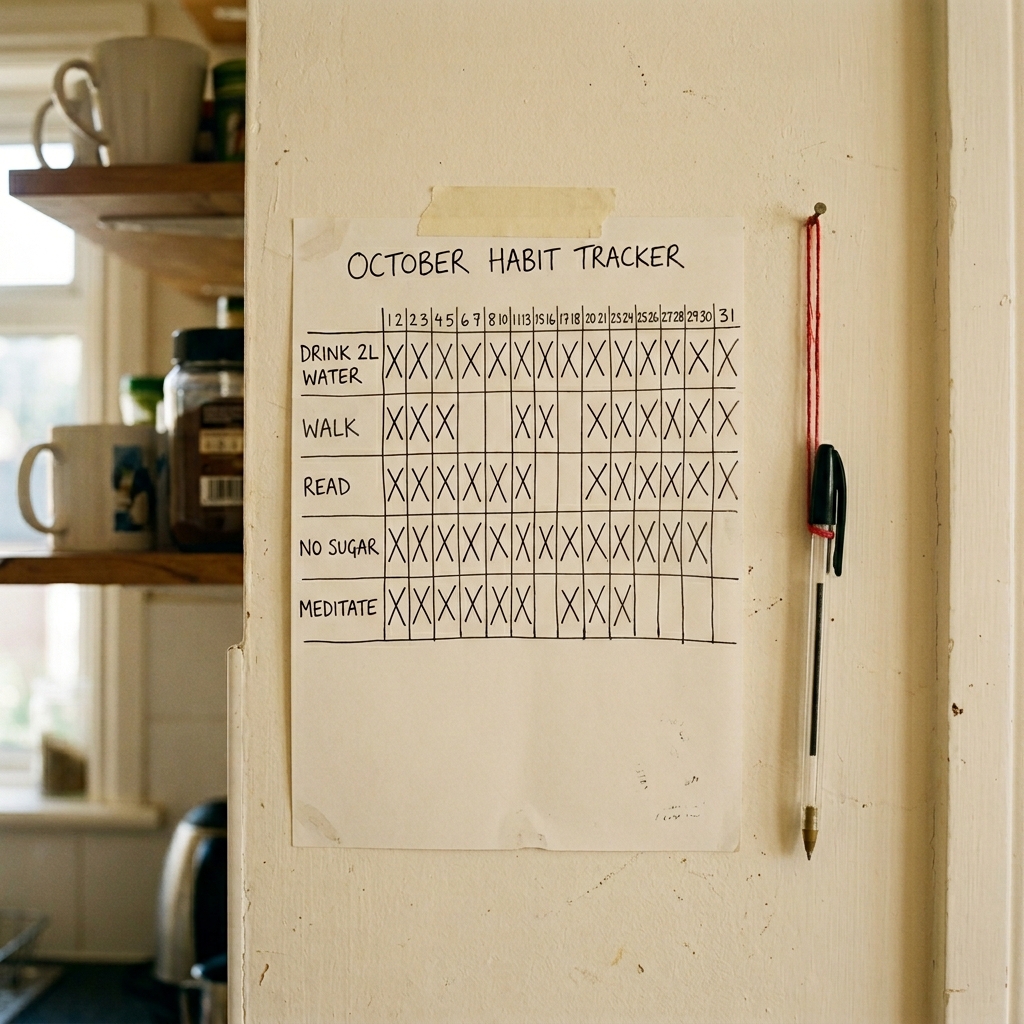
By Rachel Bennett There’s a reason motivation videos get millions of views and almost nobody’s life changes after watching them. Motivation isn’t a strategy. It’s a weather pattern. Some mornings you wake up feeling electric, ready to attack the day. Most mornings you don’t. And the gap between the 10 percent of days you feel motivated and the 90 percent you don’t is where most goals quietly die. The people you envy (the ones who actually finish the book, build the business, lose the weight, learn the language) do not have more motivation than you. They have less. They’ve given up on motivation entirely. What they have instead is a system so boring, so small, and so repetitive that it works whether they feel like it or not. Here’s the ugly truth about how consistency actually works, and the system that replaces motivation once you stop waiting for it. Motivation Was Never Supposed to Be the Engine The fitness industry sold you a lie. The self-help industry extended it. Every social media guru built their brand around it. The lie is: “feel the motivation, then do the work.” In reality, the sequence is reversed. You do the work first. Motivation shows up afterward, if at all. And most days it doesn’t show up, and the work still gets done. Every elite performer in every field describes the same thing when you read their interviews closely. They don’t feel motivated most days. They feel the same lukewarm reluctance you feel. The difference is they stopped waiting for the feeling to arrive before they got started. They decoupled the action from the emotion. The System: Shrink the Entry Point Until Resistance Disappears Most consistency failures happen at the start. You don’t fail to write the novel. You fail to open the document. You don’t fail at working out. You fail to put on the shoes. The battle is won or lost in the first 60 seconds of whatever you’re trying to do, and motivation is the worst possible tool for winning that battle. So you shrink the entry point. Instead of “write for an hour,” the commitment is “open the document.” Instead of “do a full workout,” the commitment is “put on the clothes.” Instead of “meditate for twenty minutes,” the commitment is “sit down and close your eyes for three breaths.” This sounds too small to matter. It is not. The shrunken entry point bypasses the nervous system resistance that was blocking the larger action. Once you’re in the document, you usually keep typing. Once the workout clothes are on, you usually train. The small action does the heavy lifting the motivation was supposed to do. Attach the Habit to Something You Already Do The second pillar of the boring system is something behavior researchers call “habit stacking.” Instead of relying on memory or intention to trigger a new habit, you attach it to an existing one. After I pour my morning coffee, I open the document. After I brush my teeth at night, I write one sentence in my journal. After I sit down at my desk, I write one line of the book. The old habit becomes the alarm clock for the new one. For more on how environment design beats willpower, see youre not lazy youre trapped. This removes the moment-of-decision that kills most new habits. You’re no longer deciding every morning whether to work on the book. The coffee makes the decision for you. The brushing makes the decision for you. By removing the decision, you remove the failure point. Never Miss Twice The most honest truth about consistency is that everyone misses days. You will miss workouts. You will miss writing sessions. You will miss the morning routine. The difference between the consistent people and the inconsistent ones is not that the consistent ones never miss. It’s that they have a hard rule about missing: never two days in a row. Miss one day, and it’s a rest day. Miss two days in a row, and that’s the beginning of a new default. Three days becomes a week. A week becomes a month. The consistent person protects the second day at all costs. They don’t need to be perfect, but they treat two-day gaps as the red line that triggers immediate action, even if the action is the minimum version. Track It So You Can’t Lie to Yourself You will lie to yourself about how often you do the thing. You’ll remember the good weeks and forget the bad ones. You’ll tell yourself you’re doing great when you’ve missed half the days. The only cure is to track it in a way you can’t manipulate. A simple calendar with an X on each day you did the thing is enough. A spreadsheet works. A paper habit tracker taped to the fridge works. The specific tool doesn’t matter. What matters is that the evidence is visible, honest, and impossible to ignore. Seeing the gaps in your tracker is uncomfortable. That discomfort is the feedback loop that keeps you consistent. Detach Identity From Outcomes, Attach It to Actions Here’s the mindset shift that makes the whole system stick. Stop defining yourself by what you’ve accomplished, and start defining yourself by what you do every day. I’m not a person who “will write a book.” I’m a person who writes every morning. I’m not a person “trying to get in shape.” I’m a person who trains three times a week. The outcome stops being the carrot. The identity becomes the reward. You get to be that person every single day you do the thing, regardless of whether the outcome has arrived yet. For more on how perfectionism disguises itself as high standards, see procrastination lie you keep telling yourself. This is why consistent people seem unfazed by slow progress. They aren’t chasing the outcome. They’re already living as the person who takes the action. The outcome is a downstream consequence of who they’ve decided to be, and who
The 7-Day Discipline Reset: How Burned-Out Entrepreneurs Rewire Their Focus Before the Business Suffers
By Lauren Mitchell There’s a specific moment most entrepreneurs recognize. You sit down at your desk, open your laptop, and realize you’ve lost something. The fire. The edge. The ability to just sit and execute. You spend thirty minutes clicking between tabs. You answer three emails. You check Slack. You check it again. The day is gone and nothing real got done. This is the first visible sign of discipline erosion. It isn’t laziness, and it isn’t a character flaw. It’s a system that’s been running too hard for too long, and the work that used to come easily now requires six times the mental force to start. If you don’t reset it quickly, the erosion spreads. It starts showing up in missed calls, skipped workouts, declined invitations, and eventually in the numbers of the business itself. The good news is that discipline is not a trait. It’s a system. And systems can be reset in seven days if you know which levers to pull. Here’s the exact protocol. Day 1: Stop Lying to Yourself About Your Sleep Most burned-out entrepreneurs are running on bad sleep they’ve normalized. Six hours a night is not enough. Five hours a night is a crisis. Before you fix your calendar, your focus, or your habits, you have to stop negotiating with sleep. On Day 1, set a non-negotiable bedtime that gives you seven and a half hours before your wake time. Put your phone outside the bedroom. Cut caffeine after noon. If you wake up feeling foggy for the first few mornings, that’s sleep debt catching up, not a problem. Keep going. For more on what happens when you’re sleeping but not rested, see 8 hours sleep still tired hidden energy thief. Day 2: Audit Your Calendar Without Mercy Most discipline problems are actually calendar problems. You’re not undisciplined. You’re overcommitted. Every hour of your day is claimed by meetings, slack messages, fires, and favors, and the actual work of your business gets the leftovers. Open your calendar. Look at the last seven days. For every meeting, ask one question: “Did I have to be there?” For every recurring meeting, ask: “If this were cancelled, what would actually go wrong?” In most cases, the answer is “not much.” Cut ruthlessly. Block two uninterrupted hours per day for deep work, and defend those blocks like your revenue depends on them, because it does. Day 3: Reset Your Phone Relationship Your phone is the single biggest drain on your discipline. Not because you’re weak. Because the device is engineered to extract your attention, and you’ve been handing it over for years. You can’t reset focus without resetting this one relationship first. Three changes, all today. Move every social app off your home screen into a folder on the last page. Turn off every notification except calls and texts from a whitelist of people who actually matter. Set your phone to grayscale (Settings > Accessibility > Display > Color Filters). Grayscale breaks the dopamine loop that keeps you tapping. You’ll check your phone less in 24 hours than you did in a week. Day 4: Pick One Keystone Habit Burned-out entrepreneurs try to fix everything at once. That’s part of why the burnout happened. Today, you’re picking one habit that reliably triggers a better version of you, and you’re protecting it like it’s the business itself. For most people, this keystone habit is a morning workout. Not because exercise is magic, but because completing one hard thing at the start of the day makes every other hard thing feel smaller. For others, it’s a daily writing session, a morning walk, or an uninterrupted breakfast with their family. Pick one. Build the day around it, not the reverse. Day 5: Kill One Recurring Commitment Look at your list of recurring commitments: the weekly call with someone who drains you, the board you’re on but no longer believe in, the podcast you said yes to when you had more energy, the vendor meeting that’s become theater. Today, you’re going to end one of them. Send the email today. Not tomorrow. Today. You don’t need a long explanation. “I need to step back from this commitment to focus on other priorities” is a complete sentence. The energy this frees up is more than you think, because it wasn’t just the hour of the meeting. It was the mental residue before and after. For a broader look at why you might be feeling this way systemically, see burnout is costing you 47k a year. Day 6: Design Your First Focused Work Block By Day 6, you’ve fixed sleep, reclaimed calendar space, rebuilt your phone relationship, added a keystone habit, and cut a commitment. Now you’re ready to actually work with focus again, possibly for the first time in months. Schedule one three-hour deep work block tomorrow morning. No meetings. No Slack. No email. One project. One outcome. The rules: phone in another room, water on the desk, calendar blocked, notifications off. If three hours feels impossible, start with 90 minutes. The point is to rebuild the muscle of sustained attention, which has likely atrophied while you’ve been putting out fires. Day 7: Execute the Block and Review Today, you do the block. No exceptions, no cheating, no “I’ll just check one thing.” You show up at the scheduled time, you do the work, and you stop when the timer goes off. Then you sit with a notebook for ten minutes and answer three questions. First: what felt hardest about the block? Was it the focus itself, or was it resisting the urge to check things? Second: what got done that you’ve been putting off for weeks? Third: what does tomorrow’s block need to be? This ten-minute reflection is what makes the reset stick. It converts a single good day into a repeatable pattern. Miss this step and the reset becomes a memory. Do it, and you’ve just installed a system that will outlast the reset itself. The Reset Is
You’re Not Lazy, You’re Trapped: The Real Reason You Feel Stuck Despite Doing “All the Right Things”
By Rachel Bennett You wake up early. You make the to-do list. You read the productivity books. You’ve tried the 5 AM club, the Pomodoro technique, the habit trackers, the accountability partners. And you still feel stuck. Still not moving. Still wondering why the thing everyone else seems to be doing feels impossible for you. So you do what most people do. You conclude you’re lazy. That there’s something broken in you. That other people just have more discipline, more willpower, more whatever-it-is-you-don’t-have. Here’s what almost nobody tells you: you’re not lazy. You’re trapped. There’s a real, identifiable reason you can’t move, and it has almost nothing to do with your character. It has to do with five specific traps that hijack action at the level of your nervous system, your environment, and your identity. Once you see them, you can start unraveling them. Until you do, more willpower will not help. 1. You’re Trapped by a Decision You Haven’t Actually Made A huge amount of “stuckness” is actually a decision you’re avoiding. You keep researching. You keep thinking about it. You keep running scenarios. You tell yourself you’re not ready, not informed enough, haven’t figured out the perfect version. What’s actually happening is that you know what you need to do, and you don’t want to do it yet. This pattern feels like productivity because you’re busy. You’re reading. You’re planning. You’re weighing options. But no decision gets made, so no action starts. Weeks become months. Months become years. The “research phase” becomes the destination instead of the doorway. How to break out: Name the decision you’re avoiding. Out loud. Write it down. Then give yourself a deadline to make it. Not to finish it. Just to choose. The stuckness usually dissolves the moment the decision is made, because the weight you were carrying wasn’t the work. It was the unmade choice. 2. You’re Trapped in a Nervous System That’s Stuck in Freeze If you’ve been in chronic stress, high anxiety, or low-grade overwhelm for months or years, your nervous system adapts. It stops going into fight-or-flight and starts going into freeze. Freeze looks like: staring at your laptop, unable to open the document. Feeling tired all the time despite sleeping. Scrolling for hours when you meant to work. Knowing exactly what you should do and being physically unable to start. Freeze is not laziness. It’s a physiological response. Your body has decided that whatever task is in front of you is threatening enough that the safest move is to not move. Willpower does not fix a frozen nervous system. In fact, pushing harder when you’re frozen usually deepens the freeze. How to break out: Do something small and physical first. Not mental. Not task-related. Go for a walk. Do ten pushups. Take a cold shower. Dance for one song. The goal is to wake the body up, not to “be productive.” Once the body comes back online, the mind follows. For more on what happens when the nervous system stays stuck on, see 14 day mental reset overstimulated mind. 3. You’re Trapped by Perfectionism That Looks Like High Standards Perfectionism is the most socially acceptable form of self-sabotage. It looks like caring about quality. It looks like being thorough. It looks like having high standards. What it actually does is guarantee that nothing ever ships, because nothing is ever ready. If you find yourself rewriting the same email for an hour, unable to publish the thing you made, constantly “almost ready” but never starting, perfectionism is running your life. And the cruelest part is that perfectionism lies to you about what it’s for. It tells you it’s protecting quality. What it’s actually protecting is you, from the possibility of being seen doing something imperfect. How to break out: Build shipping deadlines that are public. Publish things at 80 percent ready. Show your work before it’s polished. The only antidote to perfectionism is practicing imperfect completion until your nervous system learns that imperfect doesn’t equal unsafe. No amount of thinking your way out of perfectionism works. You have to ship imperfect things until imperfect feels normal. 4. You’re Trapped in an Identity That No Longer Fits Some of the stuckness you’re feeling is because you’ve outgrown the identity you built your life around, and you haven’t built the new one yet. You’re still trying to operate as the person you were five years ago, but that person’s systems, rules, and habits don’t fit the life you’re trying to live now. This shows up as: doing things you’re proud of that used to feel exciting and now feel empty. Keeping commitments you made when you were someone else. Struggling to motivate yourself to do things you used to love. Feeling like a stranger in your own calendar. This isn’t a willpower problem. It’s an identity update problem. How to break out: Take an honest inventory. What on your schedule, your to-do list, and your goals reflects who you’re trying to become, versus who you used to be? Cut the stuff from the old identity without apology. You don’t owe your past self the life they planned. You’re allowed to redirect. For more on this shift from “trying harder” to “redesigning the system,” see motivation is dead boring system that keeps you consistent. 5. You’re Trapped by an Environment That’s Fighting You Willpower is the smallest force in human behavior. Environment is the biggest. If your phone lives next to your bed, you will scroll before you think. If your workspace is covered in clutter, you will have mental clutter. If the people around you don’t believe in what you’re trying to do, you will quietly absorb their doubt. These aren’t character flaws. They’re design choices. Most stuck people are trying to out-discipline an environment that’s actively working against them. They wonder why they can’t stop checking their phone while their phone sits three inches away. They wonder why they can’t focus in a kitchen that looks like a